Insights · 29/10/2026
Wood sculpture: reading colour together with carving
The Metropolitan Museum's Saint Mark is carved in linden wood, gilded and polychromed. The museum attributes it possibly to Johann Georg Libigo and dates it to the late…
Colucci Fine Art · 2 min read
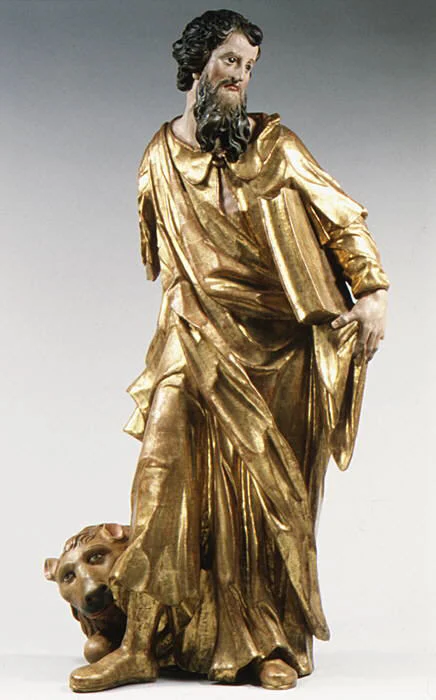
The Metropolitan Museum’s Saint Mark is carved in linden wood, gilded and polychromed. The museum attributes it possibly to Johann Georg Libigo and dates it to the late seventeenth or early eighteenth century. That caution shows how an object can be studied closely without a definitively established maker.
A surface with several histories
When looking at carved wood, do not mentally separate colour from form. The visible surface may include repainting, retouching and worn areas. These require informed examination, rather than removal in search of an imagined purity of bare wood.
Hands, attributes and gestures may help identify the subject. If an element is missing, record the loss without inventing a completion in the description. A religious figure does not automatically come from a particular church because the owning family lived nearby.
Documenting without intervention
For an initial assessment in Ticino, photograph the complete sculpture and accessible details of base, reverse and joins. Give its height and identify movable parts. Do not lift it by arms, fingers or projecting ornaments. If the surface is shedding fragments, reduce handling and report the problem.
Preserve photographs of previous settings, receipts and restoration records. They help distinguish known history from hypotheses. Before a sale or auction, the dossier should clarify which components are considered original by available examinations and which questions remain open. The museum example illustrates the relationship between carving and colour. It does not identify a sculpture offered by CFA or justify attribution through resemblance alone. Documentation of the actual object remains the starting point for any discussion.
Presenting a work to Colucci Fine Art
For an initial discussion, send clear front and back photographs, dimensions and available documents through our valuation enquiry. To discuss a possible consignment, see selling with CFA. Our premises are in Balerna, Ticino; an initial review of the documentation precedes any decision about a sale.
Sources and further reading
Image: Saint Mark, late 17th–early 18th century — 62.240.2. Possibly Johann Georg Libigo / The Metropolitan Museum of Art · Public Domain / CC0 · The Metropolitan Museum of Art. Photograph reproduced with automatic web resizing.
CFA Editorial