Insights · 29/10/2026
Micromosaics: pictures made of tiny tesserae deserve a slower look
In Gioacchino Barberi's table top of 1822 at the Metropolitan Museum, Aurora and Apollo's chariot follow a composition by Guido Reni. Micromosaic builds an image from tiny glass…
Colucci Fine Art · 2 min read
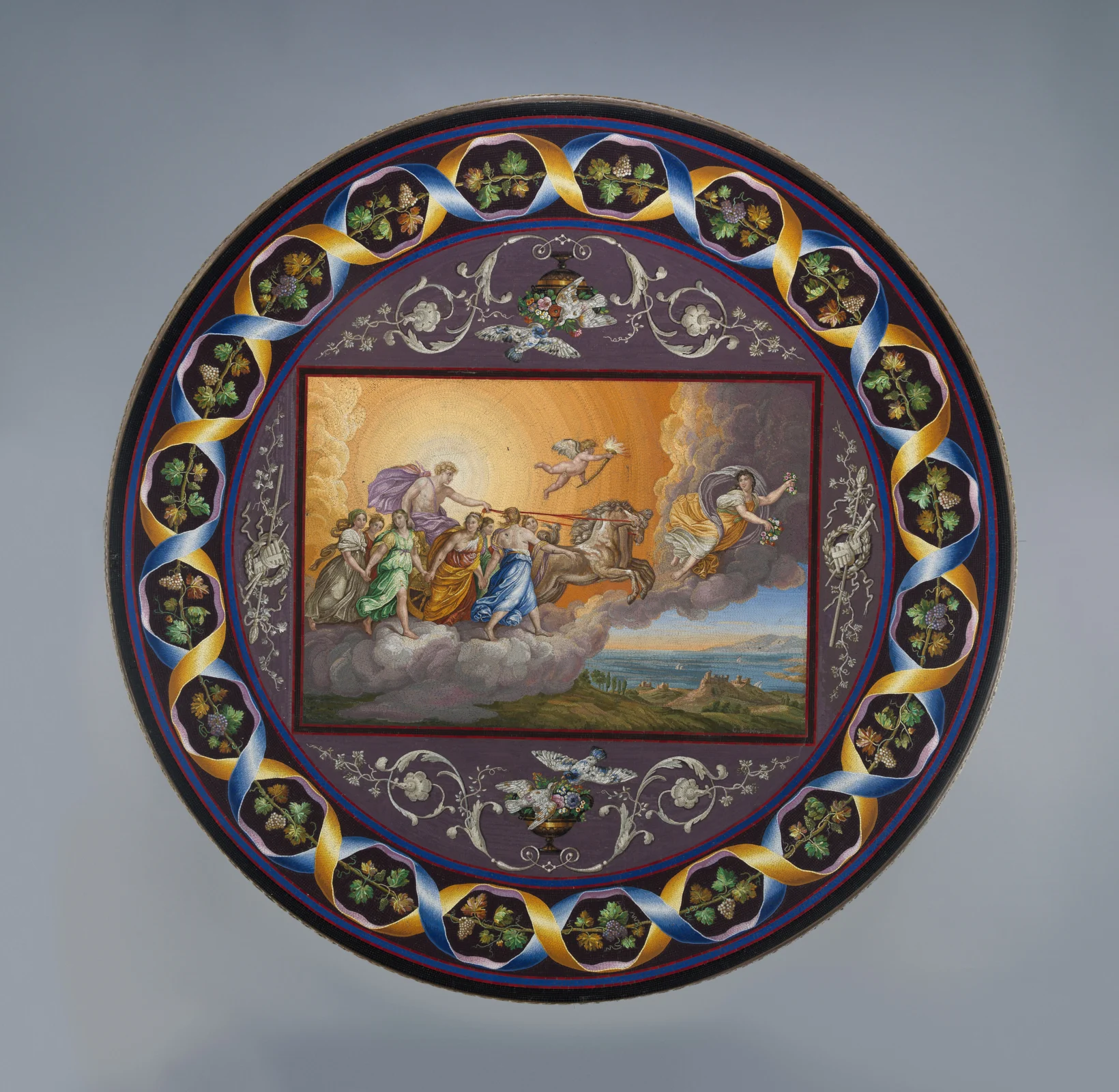
In Gioacchino Barberi’s table top of 1822 at the Metropolitan Museum, Aurora and Apollo’s chariot follow a composition by Guido Reni. Micromosaic builds an image from tiny glass tesserae. At a distance, narrative dominates; closer observation reveals the material that makes it possible.
Looking from two distances
Collectors can begin with this double view. Does the composition work as a whole? Are transitions between light and shade continuous? How are minute details handled in relation to broad background areas? These questions need not become an instant verdict on authenticity. They help describe visible quality.
The mounting deserves separate attention. Frame, base or support may not date from the same period as the image. A family object remembered as a souvenir from Rome carries useful contextual information, but a travel story cannot replace investigation of provenance and date.
Preparing a sale enquiry
For an initial micromosaic assessment in Ticino or Italy, photograph the complete front, profile and accessible parts of the reverse. Add clear details of tesserae and inscriptions without applying liquids or other materials to heighten contrast. Record losses, cracks and known interventions.
Preserve cases, old receipts and photographs, which may explain how the piece was presented over time. Avoid separating the mosaic from its support to search for marks. A possible sale or auction requires workmanship, condition and documentation to be considered together. The fineness of the tesserae is one observation, not a formula that calculates the work’s value on its own. The museum example illustrates a technique and is not an object offered by CFA; it provides questions to ask rather than a ready-made market comparison.
Presenting a work to Colucci Fine Art
For an initial discussion, send clear front and back photographs, dimensions and available documents through our valuation enquiry. To discuss a possible consignment, see selling with CFA. Our premises are in Balerna, Ticino; an initial review of the documentation precedes any decision about a sale.
Sources and further reading
Image: Gioacchino Barberi, piano con Aurora e il carro di Apollo, da Guido Reni, 1822, The Metropolitan Museum of Art, 2016.709. Gioacchino Barberi · Public Domain / CC0 · The Metropolitan Museum of Art. Photograph reproduced with automatic web resizing.
CFA Editorial