Exhibitions & Museums · 28/10/2026
San Giovanni in Mendrisio: from convent to museum, reading art in context
A painting on a white wall appears self-contained. In a church, it encounters altars, light, sculpture and routes through the building. The San Giovanni complex in Mendrisio offers…
Colucci Fine Art · 2 min read
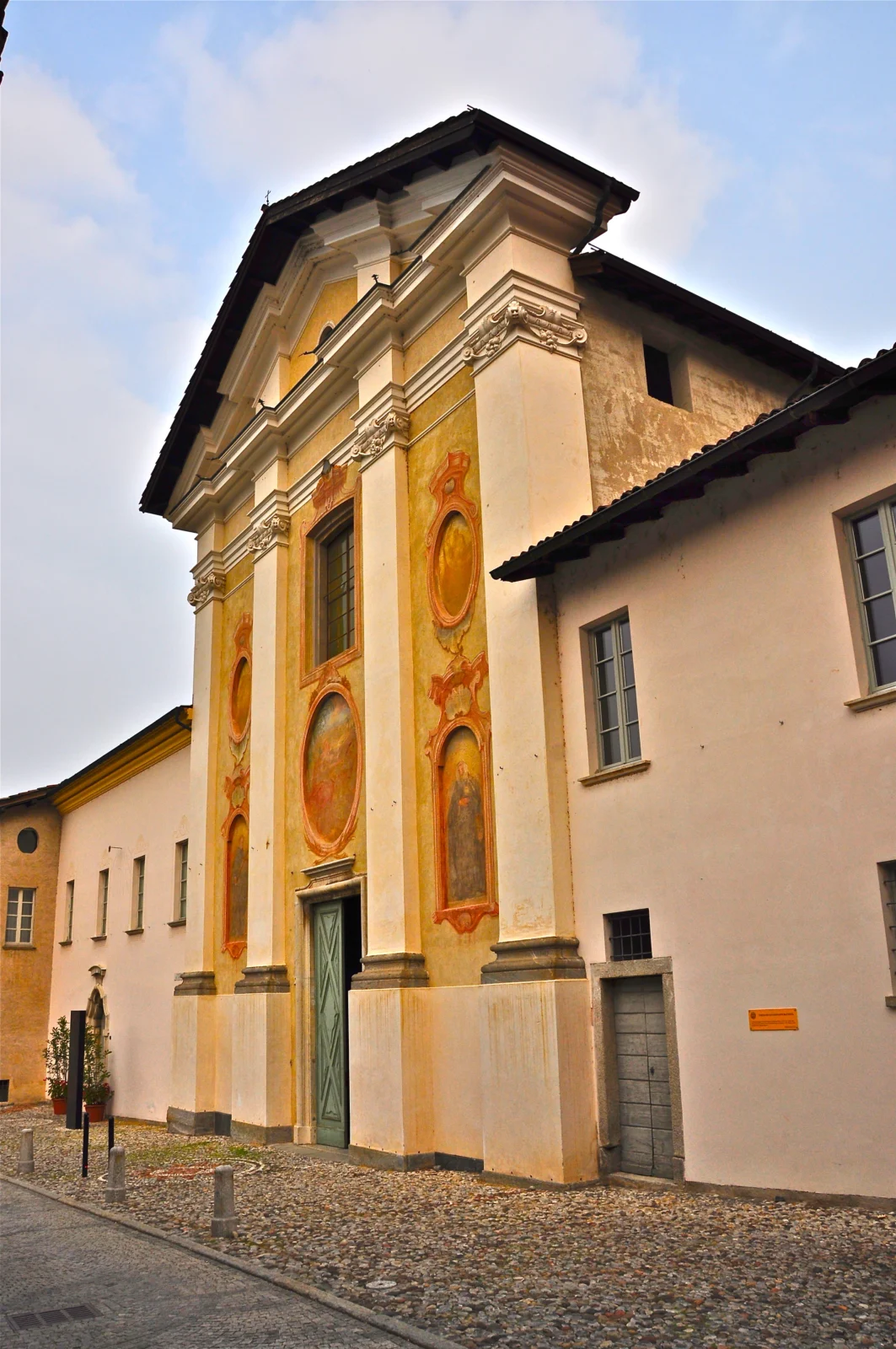
A painting on a white wall appears self-contained. In a church, it encounters altars, light, sculpture and routes through the building. The San Giovanni complex in Mendrisio offers a way to consider this difference: a work’s history includes the place for which it was conceived and those through which it subsequently passed.
A place with several lives
Founded in 1982, the Museo d’arte Mendrisio occupies the former Servite convent. The complex includes the eighteenth-century church of San Giovanni and a sixteenth- to seventeenth-century cloister. Its history brings religious, charitable, educational and museum functions into relation.
Mendrisiotto Turismo records that the Servites arrived in 1477 on a site previously used as a hospice and left in 1852. This sequence cautions against assuming that every object in a building dates from its construction.
Context changes how we look
When studying a religious image, consider its original height, the viewer’s distance and its relationship to neighbouring scenes. A figure intended to be seen from below may have different proportions from a domestic portrait. An apparently isolated gesture may address someone depicted on another wall.
Applying these questions to a family painting improves its description. It does not establish that it came from San Giovanni or any other religious building. Church provenance requires identifiable evidence, rather than a devotional subject or an oral tradition alone.
What to look for in the papers
Record references to chapels, patrons, confraternities or restorations. Compare recorded dimensions with the actual work, distinguishing support from frame. An old photograph may show the painting’s location, but identification of the same object still needs checking, particularly when a composition was widely copied.
If you are considering a sale, retain all papers relating to the work’s history. Record gaps as well: “documented from 1920” is more useful than an unsupported ancient provenance. CFA can begin a discussion from this dossier, keeping observations, hypotheses and documented facts distinct. The museum and institutions mentioned here are not involved in the commercial valuation of works submitted to CFA.
Presenting a work to Colucci Fine Art
For an initial discussion, send clear front and back photographs, dimensions and available documents through our valuation enquiry. To discuss a possible consignment, see selling with CFA. Our premises are in Balerna, Ticino; an initial review of the documentation precedes any decision about a sale.
Sources and further reading
- Musei d’arte del Mendrisiotto — Museo d’arte Mendrisio
- Mendrisiotto Turismo — Il Convento di San Giovanni
Image: Chiesa di San Giovanni (Mendrisio). WPestana · CC BY-SA 3.0 · Wikimedia Commons. Photograph reproduced with automatic web resizing.
CFA Editorial