Insights · 28/10/2026
Bern, Albert Anker and the time of reading: returning to a 2024 exhibition
An open book, a quiet gesture and a social history: Anker and Bern’s 2024 exhibition offer fresh questions for collecting Swiss art.
Colucci Fine Art · 3 min read
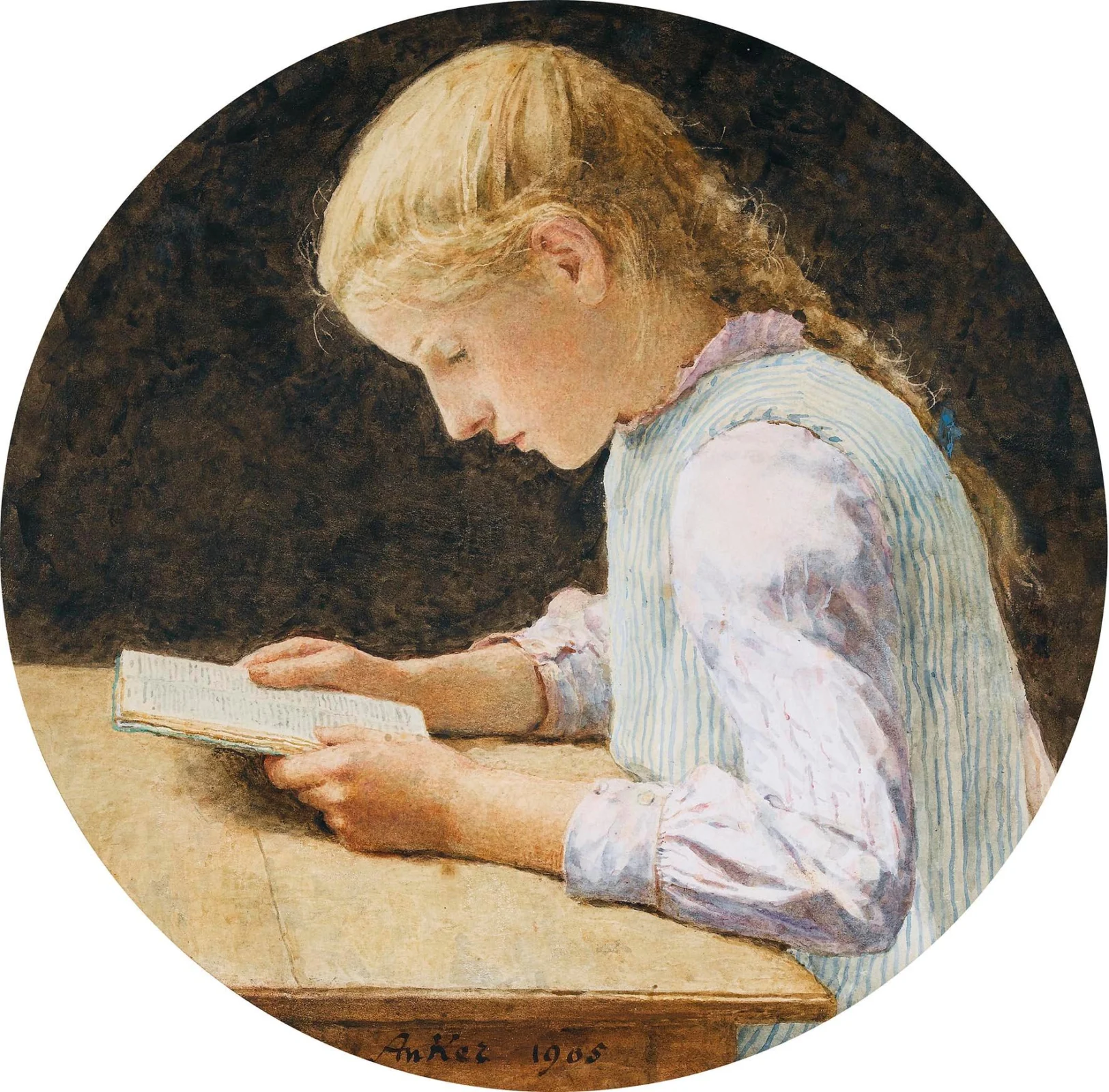
The girl does not look towards us. Her face is inclined, her hands hold the book, and the table forms a threshold between her space and ours. In Albert Anker’s watercolour illustrated above, Lesendes Mädchen, dated 1905, reading is not an accessory: it is the action organising the entire image.
22 March–21 July 2024: a date for the archive
Kunstmuseum Bern devoted Albert Anker. Lesende Mädchen to girls engaged in reading. The exhibition has ended. This article revisits its theme through official resources today; it is neither an eyewitness review written during the show nor news of a current opening.
The museum connected the motif with women’s education. A productive question remains: can a quiet interior communicate more than domestic serenity? When a book becomes central, the image asks us to consider access to knowledge, concentration and the independence of the person depicted.

Look at the gesture, not only the costume
In the 1905 image, the dark background gathers the figure and sets off the pale blouse. The profile and hands direct attention towards the pages. The circular format narrows the field: the setting does not compete with the reader. These are observations of the reproduction, distinct from a physical examination of the original.
The illustrated watercolour is not presented as a loan to the Bern exhibition. It offers another example of the motif. Precise captions matter particularly when images of related works appear beside exhibition stories.
For owners of everyday scenes
A familiar subject can encourage us to treat a work simply as a memory of a vanished world. To study it, describe what actually happens: who looks at whom, which object is used, and how light distributes attention. Reading, writing and sewing are different actions, even when costume and interior seem similar.
Then move to the data: support, medium, measurements and inscriptions. A watercolour and an oil painting do not become comparable in the market simply because they share a subject. Actual size also matters: a full-screen reproduction can conceal the intimate scale of an object.
A dossier before the estimate
For the assessment of Swiss painting in Canton Bern, retain purchase records, earlier photographs and previous attributions, even when these need reconsideration. If a work is behind glass, do not dismantle it without expertise; first photograph what can safely be reached.
CFA can review initial documentation from its Balerna premises. Regional connections and recognisable subjects help frame research but cannot replace attribution and condition assessment. Reference to Kunstmuseum Bern implies no commercial collaboration.
Presenting a work to Colucci Fine Art
For an initial discussion, send clear front and back photographs, dimensions and available documents through our valuation enquiry. To discuss a possible consignment, see selling with CFA. Our premises are in Balerna, Ticino; an initial review of the documentation precedes any decision about a sale.
Sources and further reading
- Kunstmuseum Bern — Albert Anker. Lesende Mädchen, 22.3–21.7.2024
- Kunstmuseum Bern — Guida digitale Albert Anker
Image: Albert Anker, Lesendes Mädchen, 1905, acquerello. Albert Anker · Public domain · Wikimedia Commons. Photograph reproduced with automatic web resizing.
CFA Editorial