Insights · 29/10/2026
Collectible glass: form and documentation before a maker’s name
A late nineteenth-century goblet at the Metropolitan Museum, attributed probably to Venice, shows how elaborate a transparent object can be. The catalogue retains that qualification, probably. It is…
Colucci Fine Art · 2 min read
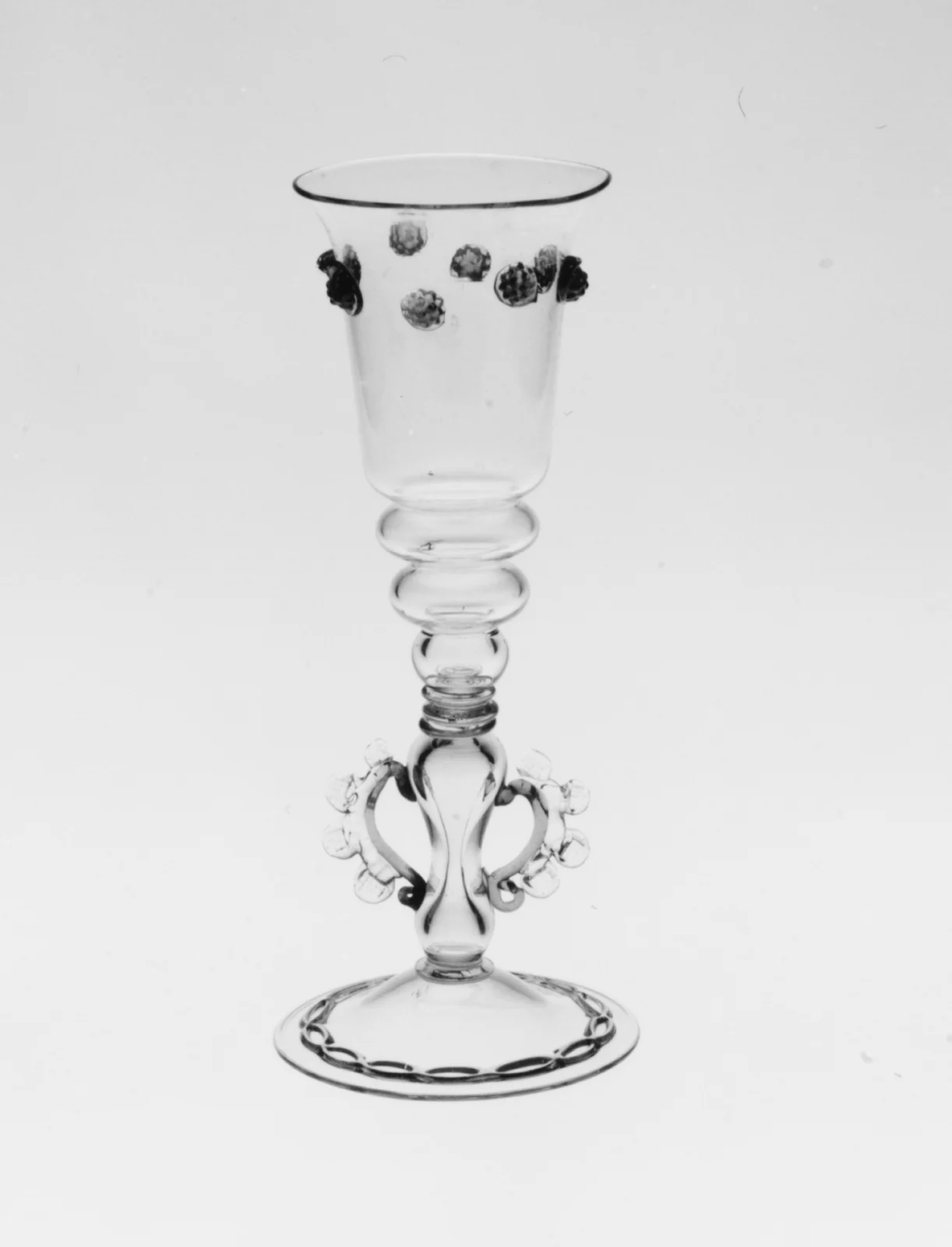
A late nineteenth-century goblet at the Metropolitan Museum, attributed probably to Venice, shows how elaborate a transparent object can be. The catalogue retains that qualification, probably. It is a useful distinction: a scholarly record may express an attribution that remains provisional.
Photographing what glass conceals
Glass is difficult to document. Reflections and transparency may erase an edge or turn a small crack into a highlight. For an initial review, use an even background and diffuse light, without filters that alter colour and contrast. Include an overall view and details of the base, upper rim and any labels.
Do not rest metal rulers against the rim or remove historic stickers to improve a photograph. Give height and maximum diameter where these can be measured safely. If an element is loose or cracked, avoid manipulating it merely to obtain a different angle.
A signature is part of the dossier
A signature, mark or label should be considered alongside shape, technique and documentation. Resemblance to a known model is insufficient to assign a piece to a particular glassworks. Conversely, the absence of a signature does not automatically remove an object’s interest.
When assessing a glass collection in Ticino or Lombardy, keep every piece connected with its invoices. Photograph groups and individual examples, distinguishing genuine pairs from decorative arrangements. Before a sale or auction, this clarity supports discussion of attribution, condition and presentation. The museum illustration is a historic example shown in black and white. It does not record the glass’s actual colours and does not depict an object available from CFA. Colour photographs of the privately owned piece remain essential to an initial enquiry.
Presenting a work to Colucci Fine Art
For an initial discussion, send clear front and back photographs, dimensions and available documents through our valuation enquiry. To discuss a possible consignment, see selling with CFA. Our premises are in Balerna, Ticino; an initial review of the documentation precedes any decision about a sale.
Sources and further reading
Image: Calice, probabilmente Venezia, fine XIX secolo; fotografia in bianco e nero, The Metropolitan Museum of Art, 1975.1.1211. The Metropolitan Museum of Art; manifattura non identificata · Public Domain / CC0 · The Metropolitan Museum of Art. Photograph reproduced with automatic web resizing.
CFA Editorial