Insights · 29/10/2026
Antique silver: what to record before requesting a valuation
A teapot can become a small landscape of relief ornament. Paul de Lamerie's example of 1743–44 at the Metropolitan Museum combines silver and wood in a single object…
Colucci Fine Art · 2 min read
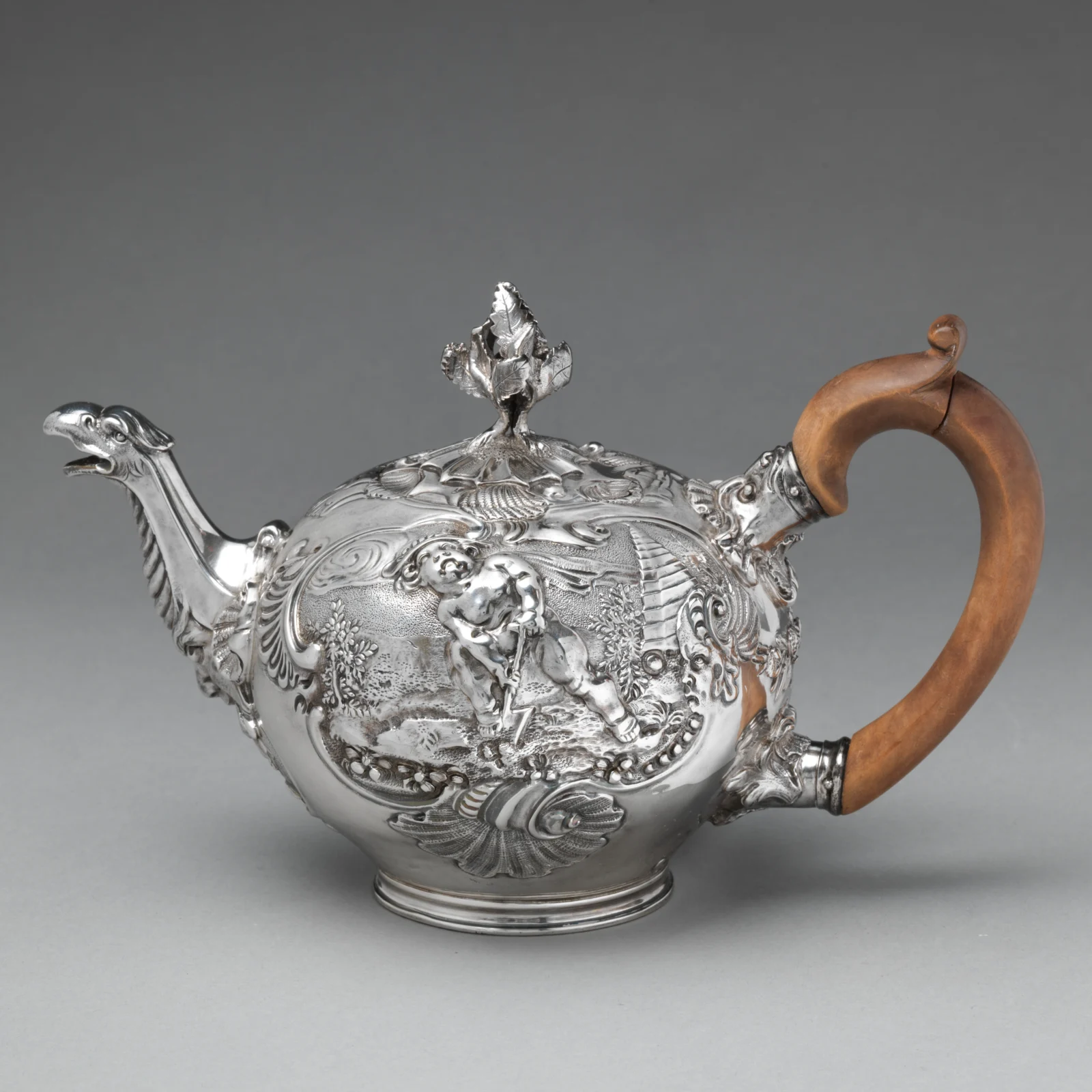
A teapot can become a small landscape of relief ornament. Paul de Lamerie’s example of 1743–44 at the Metropolitan Museum combines silver and wood in a single object. It immediately reminds us that antique silver should not be reduced to the quantity of precious metal it contains.
Form, surface and use
Follow the transitions between body, spout and handle. Does ornament follow the form or overwhelm it? Do the parts appear consistent in design and wear? Such questions guide description without justifying dismantling. A lid that does not close correctly should be recorded rather than forced.
For assessment, photographs of the complete piece, base and accessible marks are useful. Photograph marks both closely and within the surrounding surface: their position may matter as much as their design. Do not trace them with sharp tools or polish aggressively to make them clearer.
A service needs more than one photograph
A matching-looking teapot, milk jug and sugar bowl may have different dates. Record every component and keep each photograph linked to its object. If weight is already known, explain how it was measured. Handles, fillings and other materials mean that total weight cannot always be treated as the weight of silver.
Gather invoices, inventories and repair information as well. Describe monograms and coats of arms without inventing an aristocratic provenance. For owners considering a silver sale in Ticino or presenting a collection from Lombardy, an initial dossier separates questions of manufacture, workmanship and condition. The museum example illustrates a way of looking; it is neither an automatic price comparison for privately owned pieces nor an object offered by CFA.
Presenting a work to Colucci Fine Art
For an initial discussion, send clear front and back photographs, dimensions and available documents through our valuation enquiry. To discuss a possible consignment, see selling with CFA. Our premises are in Balerna, Ticino; an initial review of the documentation precedes any decision about a sale.
Sources and further reading
Image: Paul de Lamerie, teiera, 1743–44, argento e legno, The Metropolitan Museum of Art, 46.66. Paul de Lamerie · Public Domain / CC0 · The Metropolitan Museum of Art. Photograph reproduced with automatic web resizing.
CFA Editorial