Insights · 28/10/2026
Stans and the Winkelriedhaus: two photographs, many histories
In Nidwalden, a historic house and a stereoscopic view introduce questions about early photography, archives and collecting.
Colucci Fine Art · 3 min read
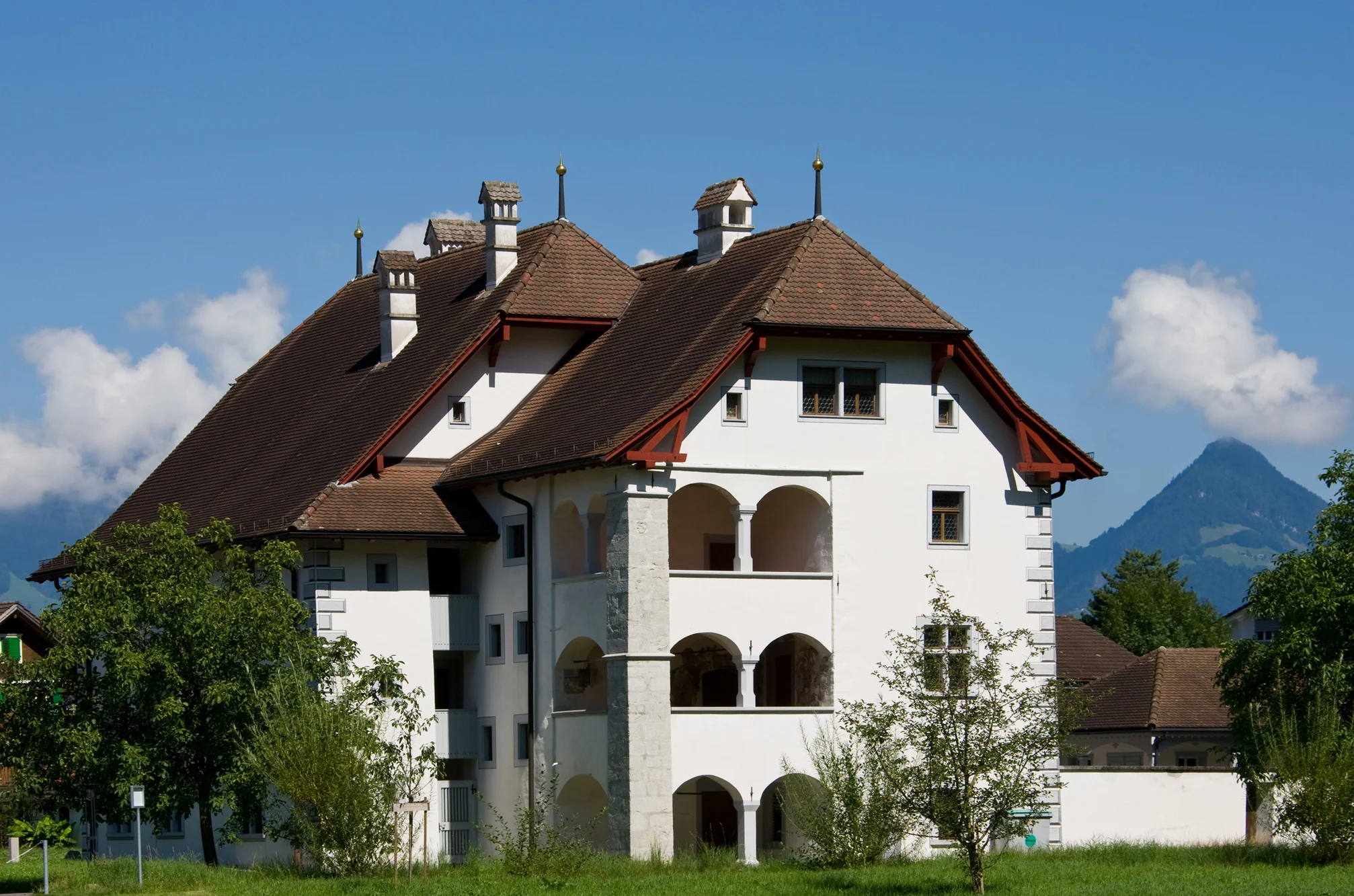
The white façade, stacked openings and dark roof: in the recent photograph the Winkelriedhaus in Stans appears as a clearly legible building. Yet changing the image changes the question. A nineteenth-century view can reveal not only the house, but how it was presented to a distant audience.
2023: a new reading of the collection
The Nidwaldner Museum’s programme records the opening of the permanent exhibition Selbst und Welt in 2023. It brings works from different periods into dialogue and considers regional artists’ relationships with the wider world. A regional collection need not have a closed horizon.
For collectors, this approach encourages research into travel, exhibitions and exchanges behind a local name. The aim is not to assign every work an international character, but to avoid restricting research to the place where it was found.

Two views on one surface
The Rijksmuseum card brings two images together side by side. Its record identifies an albumen stereograph by William England, dated circa 1850–1880. Mount and inscriptions belong to the object: cropping out one view would remove information about its format and circulation.
Look first at the whole: borders, images, title and inscriptions. Then examine the house. Differences between the photographs published here should not immediately be interpreted as building alterations: distance, framing and viewpoint can change what appears.
The image and the print are different things
The date of an exposure does not always coincide with the date of the print in your hands. A photograph of an old subject may itself be a later reproduction. In an initial record, separate attributed photographer, subject, stated technique and proposed date, explaining the source of each.
Photograph the reverse when accessible without dismantling. Notes, stamps and numbers may connect an image to a series or album. If photographs remain together, document their order before separating them: a sequence may carry meaning that individual pieces lose.
A collection in Nidwalden
To present a collection of photographs, paintings or documents from Stans and Canton Nidwalden to CFA, prepare an overview and representative examples. Identify duplicates without dismissing them automatically: formats and supports may differ. CFA reviews material from its Balerna premises; valuation then requires focused checks of originality, condition and collecting interest.
Presenting a work to Colucci Fine Art
For an initial discussion, send clear front and back photographs, dimensions and available documents through our valuation enquiry. To discuss a possible consignment, see selling with CFA. Our premises are in Balerna, Ticino; an initial review of the documentation precedes any decision about a sale.
Sources and further reading
- Nidwaldner Museum — Jahresprogramm 2024, Selbst und Welt
- Nidwaldner Museum — Jahresprogramm 2025
- Rijksmuseum via Wikimedia Commons — William England, RP-F-F08190
Image: Winkelriedhaus, Stans, fotografia del 2011. Roland Zumbuehl · CC BY-SA 3.0 · Wikimedia Commons. Photograph reproduced with automatic web resizing.
CFA Editorial