Insights · 29/10/2026
Antique maps: read the sheet, not only the territory
Sebastiano di Re's map of Greece at the Metropolitan Museum belongs to the Speculum Romanae Magnificentiae and dates to the mid-sixteenth century. A historical map is both an…
Colucci Fine Art · 2 min read
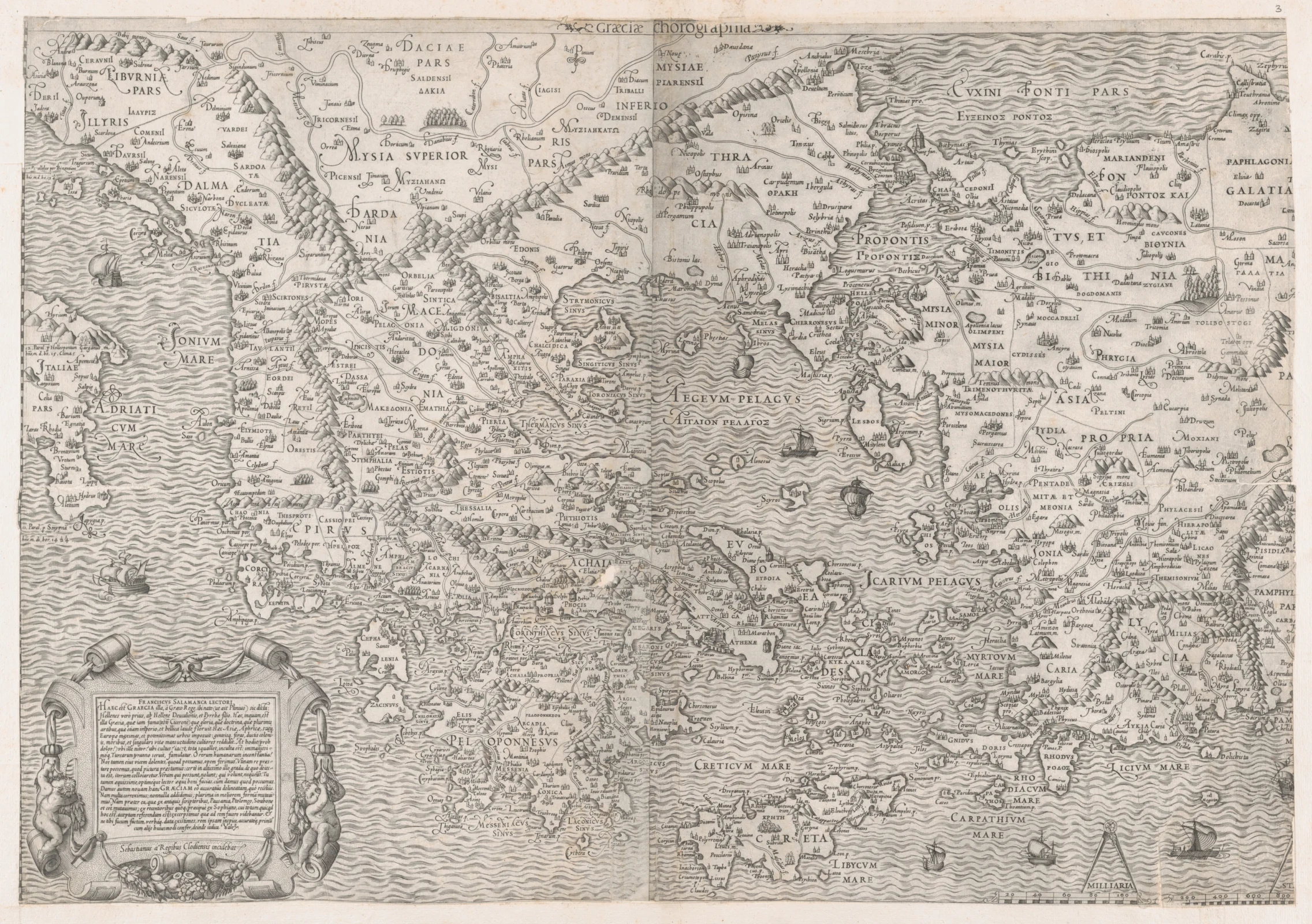
Sebastiano di Re’s map of Greece at the Metropolitan Museum belongs to the Speculum Romanae Magnificentiae and dates to the mid-sixteenth century. A historical map is both an image and a publishing document. The territory attracts attention, but smaller inscriptions often guide investigation of the particular impression.
Title, publisher and margins
Transcribe titles, names and dates exactly as they appear. Do not replace a historical place name with a modern one within the transcription; add an explanation separately. Photograph cartouches, scales, dedications and margins as well as the whole image.
An engraved date does not by itself establish when an impression was printed. Publishing state, paper and other characteristics need comparison. Colouring deserves separate examination too: an old sheet may have received colour later. Do not assume that every visible element is contemporary with every other.
The relationship with an atlas
If the map remains within a volume, preserve the whole. Title page, contents and sequence of sheets may provide information unavailable from an isolated map. Do not detach pages for photography or separate presentation before an assessment.
For collections in Ticino, Como or Lombardy, old invoices and purchase notes are also useful. A local view or map may have historical interest, but rarity and value require specific investigation. Before a sale or auction, the dossier should describe precisely what is being proposed. The museum illustration demonstrates a method and does not show a sheet available from CFA. Its relevance lies in the questions it encourages about the privately owned example.
Presenting a work to Colucci Fine Art
For an initial discussion, send clear front and back photographs, dimensions and available documents through our valuation enquiry. To discuss a possible consignment, see selling with CFA. Our premises are in Balerna, Ticino; an initial review of the documentation precedes any decision about a sale.
Sources and further reading
Image: Map of Greece, from "Speculum Romanae Magnificentiae", mid-16th century — 41.72(1.3). Sebastiano di Re · Public Domain / CC0 · The Metropolitan Museum of Art. Photograph reproduced with automatic web resizing.
CFA Editorial