Insights · 28/10/2026
Antonio Rinaldi: from Tremona to Lombardy, looking closely at nineteenth-century painting
In La polenta ai grotti di Tremona, figures gather around an everyday moment. A pale wall and deep shadow organise the space; hats, gestures and inclined bodies construct…
Colucci Fine Art · 2 min read
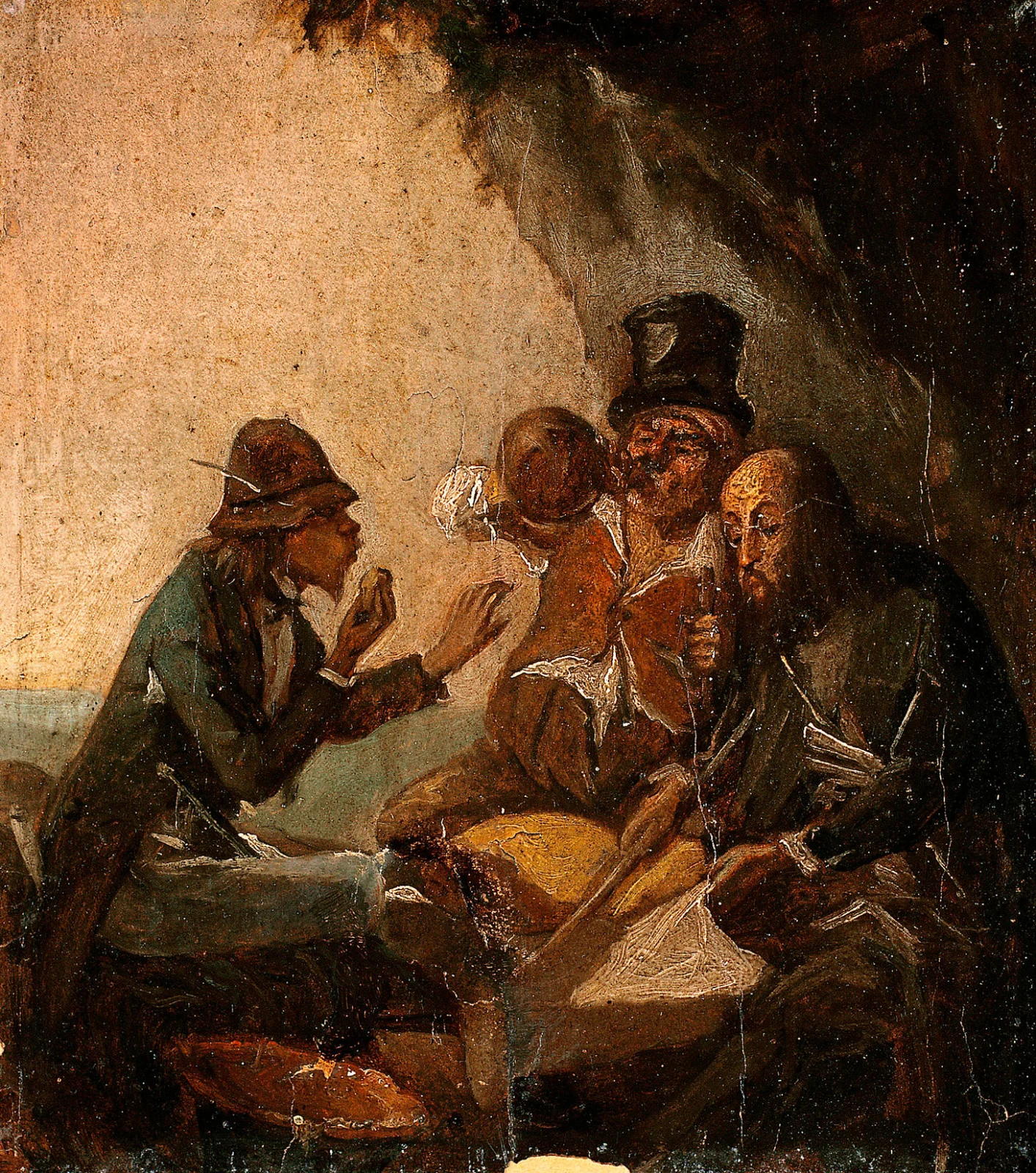
In La polenta ai grotti di Tremona, figures gather around an everyday moment. A pale wall and deep shadow organise the space; hats, gestures and inclined bodies construct a narrative without a heroic event. The illustrated work belongs to the Pinacoteca Züst and is not offered for sale.
Training and territory
Antonio Rinaldi was born in Tremona in 1816 and died there in 1875. He studied at Brera under Luigi Sabatelli and worked mainly in the Mendrisiotto and Lombardy, producing portraits, religious and historical paintings, and genre scenes.
MASI holds his Portrait of the Spinelli Sisters, an oil on canvas dated 1856. Comparing a portrait with an everyday scene shows how much an image’s function can vary within one artist’s production.
The subject does not exhaust the painting
Looking at the Tremona scene, follow the distribution of light and the rhythm of the groups. The description of local life is also a pictorial construction: some figures emerge while others gather in shadow. A recognisable place and compositional skill represent different levels of interpretation.
A painting of peasants, a grotto or a Ticino landscape therefore cannot be attributed to Rinaldi from its subject alone. Technique, quality, dating and documentation need comparison, while other artists and adaptations remain possible.
Checking a family memory
If a work has long been called “a Rinaldi” at home, record the source of that information. Look for invoices, old photographs and exhibition references. Preserve cautious wording: “attributed to” is not a definite attribution, and an old label should not be updated by erasing its text.
Useful material for an initial assessment includes front and back photographs, support dimensions and inscription details. A well-organised investigation can clarify the work’s place in family history and prepare a realistic discussion about selling, without prejudging authenticity or price.
Presenting a work to Colucci Fine Art
For an initial discussion, send clear front and back photographs, dimensions and available documents through our valuation enquiry. To discuss a possible consignment, see selling with CFA. Our premises are in Balerna, Ticino; an initial review of the documentation precedes any decision about a sale.
Sources and further reading
- Dizionario storico della Svizzera — Antonio Rinaldi, Mariangela Agliati Ruggia
- MASI Lugano — Antonio Rinaldi, Ritratto delle signorine Spinelli
Image: Antonio Rinaldi – La polenta ai grotti di Tremona. Antonio Rinaldi (1816-1875) · Public domain · Wikimedia Commons. Photograph reproduced with automatic web resizing.
CFA Editorial