Insights · 29/10/2026
Watercolours and drawings: preparing for a valuation
How to photograph and document fragile works on paper without unnecessary intervention.
Colucci Fine Art · 2 min read
A watercolour may arrive in a portfolio, behind glass or still attached to an old mount. Before presenting it for valuation, it is tempting to remove everything that looks worn. This is often the moment to pause: mounts and inscriptions may carry information, while hasty intervention can change the object that needs examination.
Start with the whole object
Photograph the work as found, including its frame or portfolio. Then take a frontal image without filters and details of visible inscriptions. If glazing reflects light, change your position or lighting rather than dismantling the sheet. State that the photograph was taken through glass.
Material matters
Watercolour, graphite, pastel and print are not interchangeable descriptions. If the medium is unknown, describe its appearance without guessing a label. Do not rub a powdery surface to test whether it is pastel. The Canadian Conservation Institute recommends minimising handling and notes that light can alter colours and paper.
Do not add adhesive tape to secure a lifting edge. The Institute’s storage note identifies problems caused by contact with unsuitable materials. A fragile or firmly attached mount calls for a paper conservator, not an improvised attempt at removal.
Which dimensions?
Distinguish the frame dimensions, mount opening and sheet size when the whole sheet is visible. The opening is not necessarily the size of the work. For a portfolio, assign temporary numbers to photographs without marking the sheets. A consistent sequence prevents documents being attached to the wrong image.
Building a sale dossier
Gather receipts, exhibition references and previous opinions. Note whether the sheets belong to one collection and whether photographs show their earlier display. CFA can review this dossier from Balerna to discuss a possible sale of works on paper. For collections in Ticino, Switzerland or Lombardy, first send an overview and representative examples.
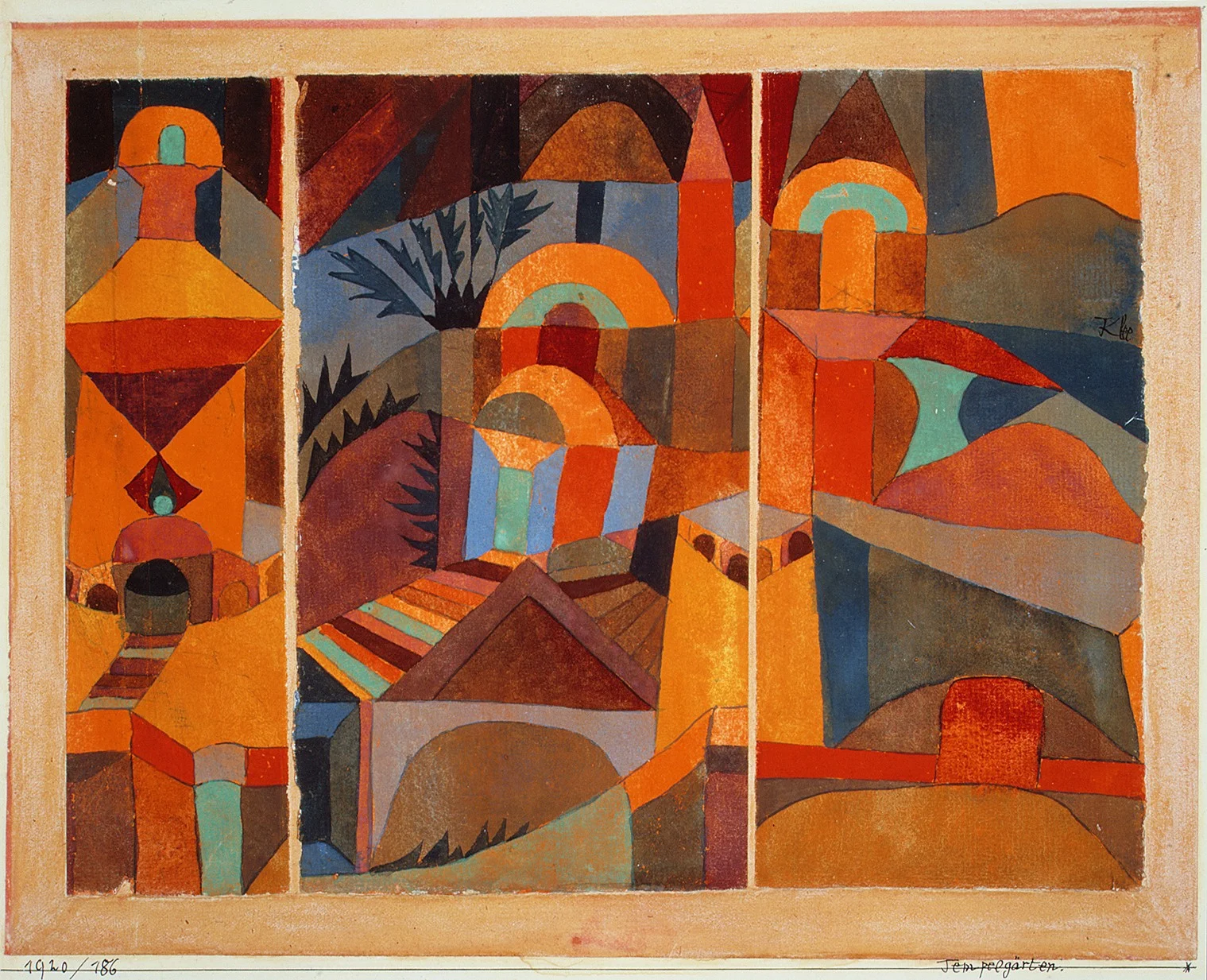
The Paul Klee image is an illustrative comparison identified in the credits, not a work offered for sale by CFA. Photographs can guide an initial assessment, but do not replace examination of the object where required.
Presenting a work to Colucci Fine Art
For an initial discussion, send clear front and back photographs, dimensions and available documents through our valuation enquiry. To discuss a possible consignment, see selling with CFA. Our premises are in Balerna, Ticino; an initial review of the documentation precedes any decision about a sale.
Sources and further reading
- Canadian Conservation Institute — Basic care: works of art on paper
- Canadian Conservation Institute — Storing Works on Paper, Notes 11/2
Image: Paul Klee, Temple Gardens, 1920 — Metropolitan Museum of Art. Paul Klee · Public domain · Wikimedia Commons. Photograph reproduced with automatic web resizing.
CFA Editorial